3D rendering service
Architectural Animation, Walkthroughs and CGI Flythroughs
From £45 per second (30-second minimum) · typically 2–3 weeks for a finished film · up to 4 revision rounds
Architectural animation puts a building in motion before the first brick is laid. A CGI flythrough sweeps in over the surrounding streets and settles on the main entrance; a 3D walkthrough opens the front door and moves at walking pace through the hall, the kitchen and out onto the balcony. We make these films for developers launching schemes off-plan, housebuilders opening a new phase, architects explaining a proposal to a planning committee and agents letting commercial space. The rate is £45 per second with a 30-second minimum, so the typical 45–60 second film costs between £2,025 and £2,700 before any optional extras.
Film works on a different rhythm from stills, and we say so at the outset. Every second is made of individually rendered frames, so the camera path is agreed on a storyboard before production begins, and a typical film takes 2–3 weeks from approved storyboard. The 5–7 business days turnaround we quote applies to still renders only. Every animation is built on the same model as your stills, so the brochure, the hoarding and the film show one consistent scheme.
- Starting price
- £45 per second (30-second minimum)
- Turnaround
- typically 2–3 weeks for a finished film
- Revisions
- Up to 4 rounds included
- You send
- Plans, elevations, sections and a finishes schedule
Walkthroughs, flythroughs and the shots between
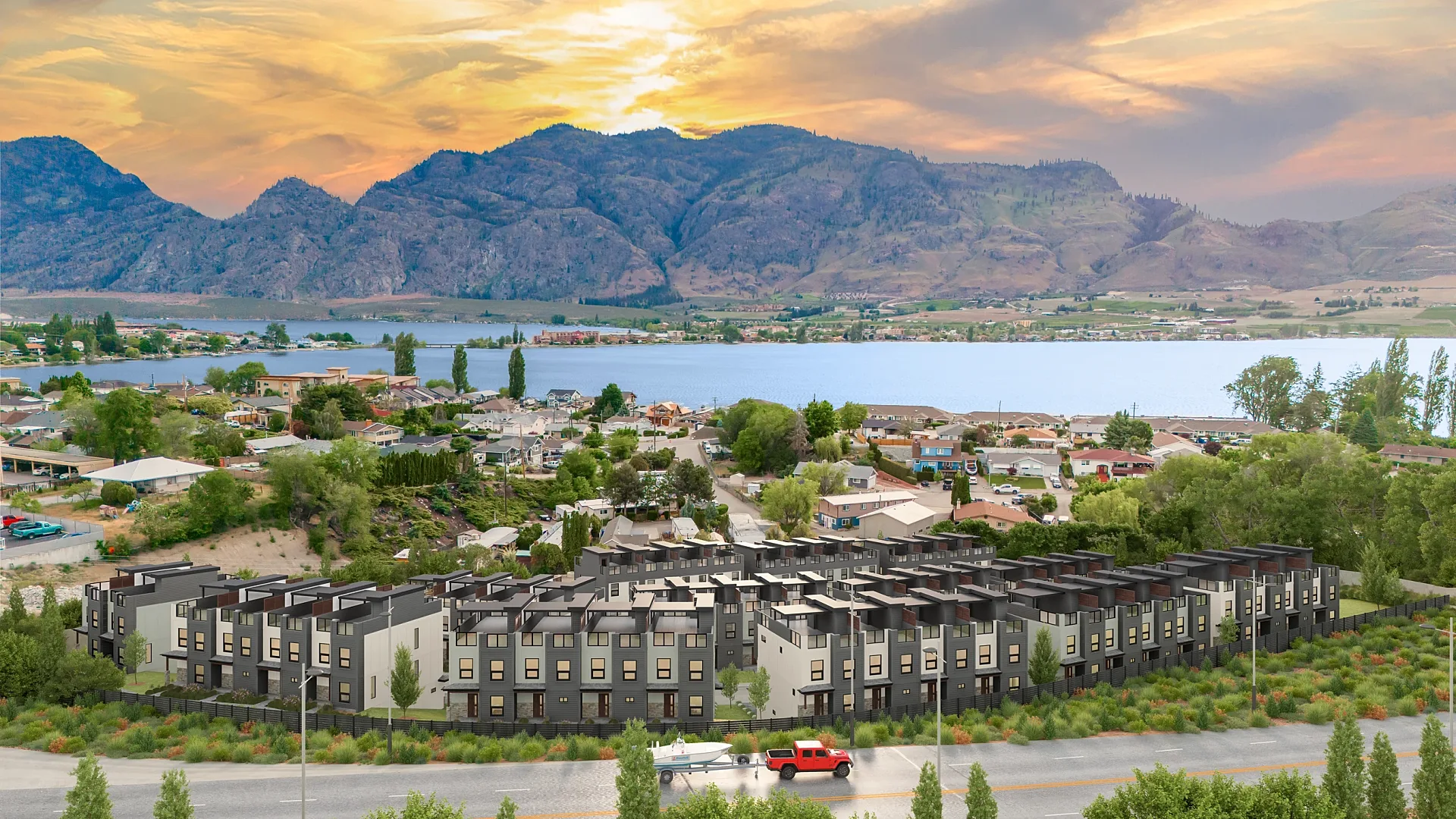
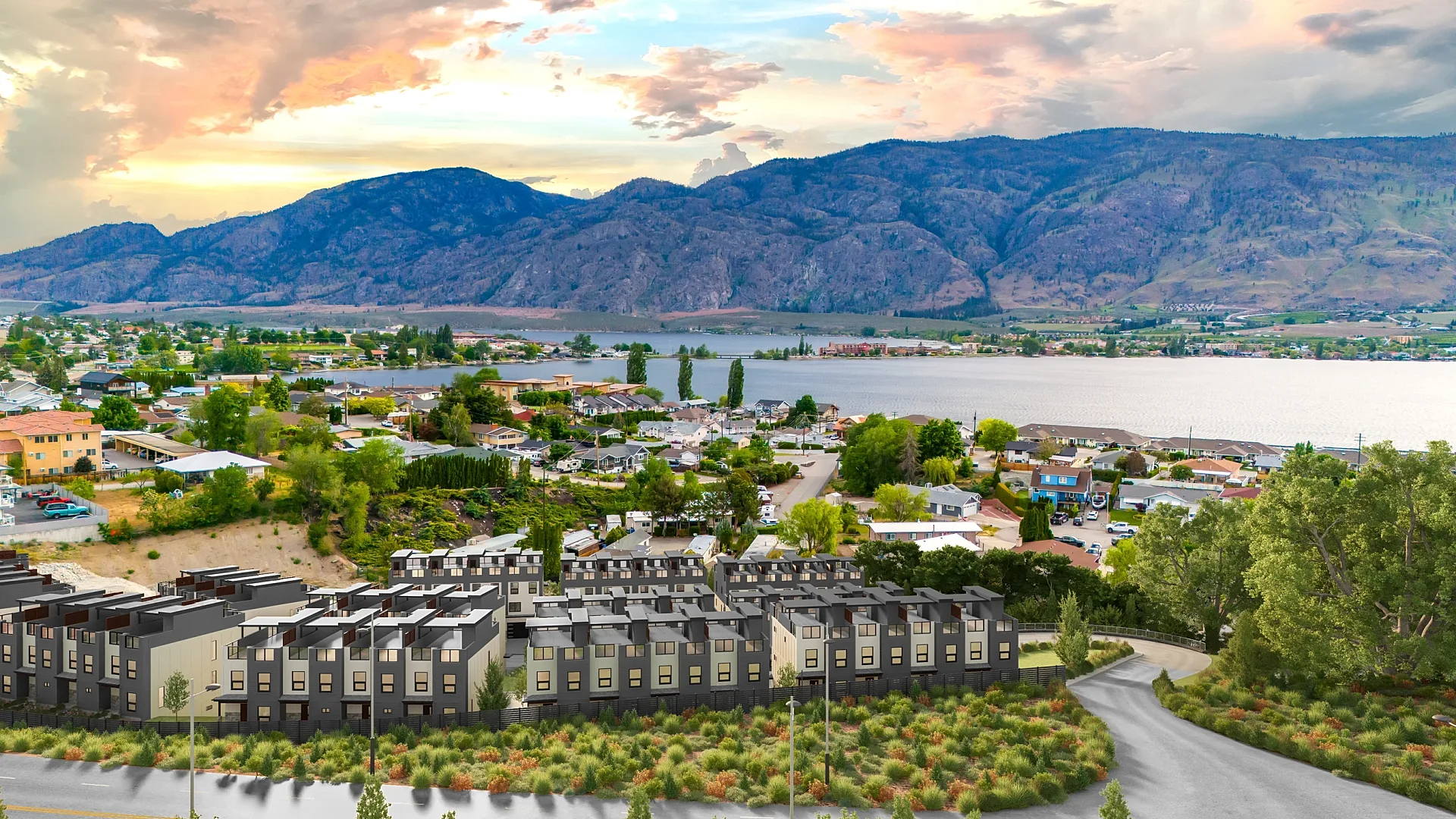
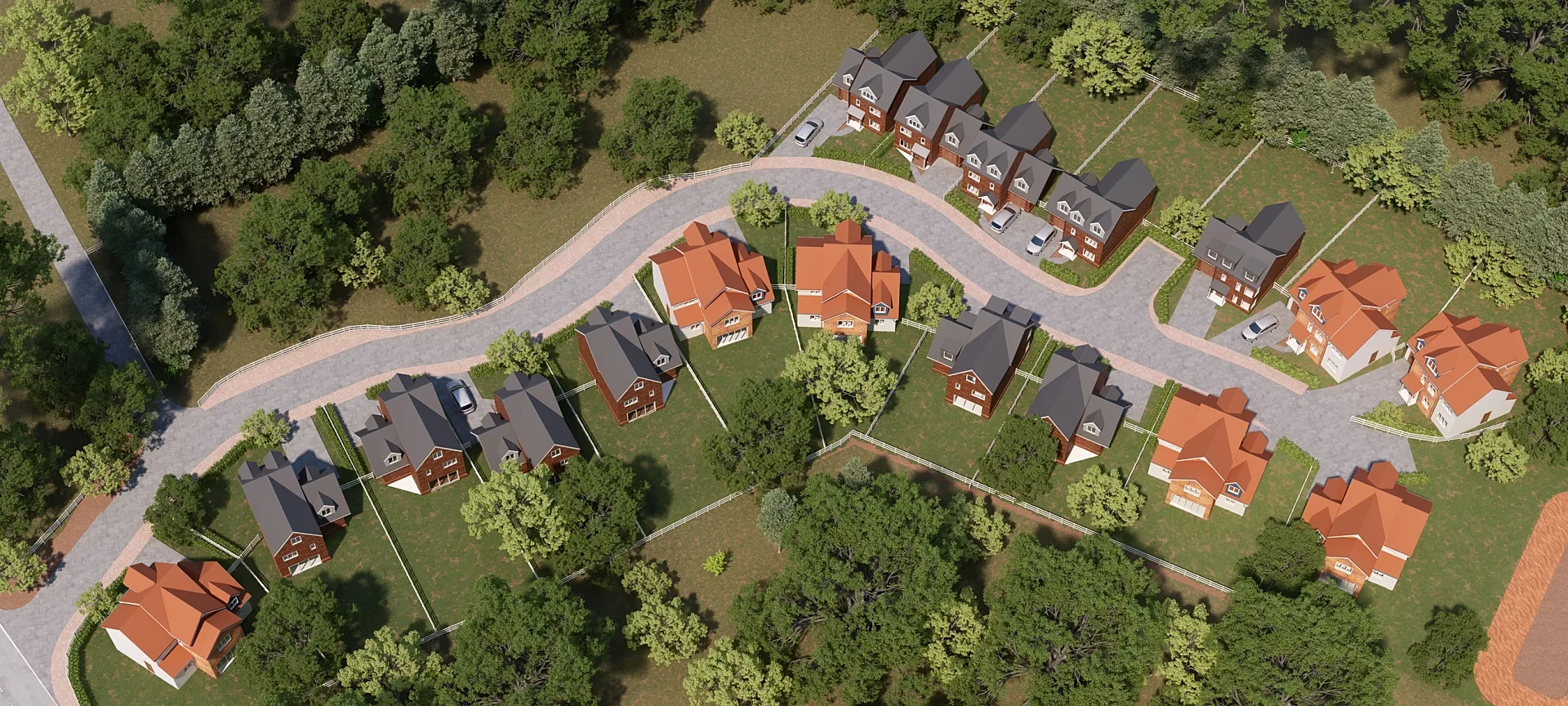
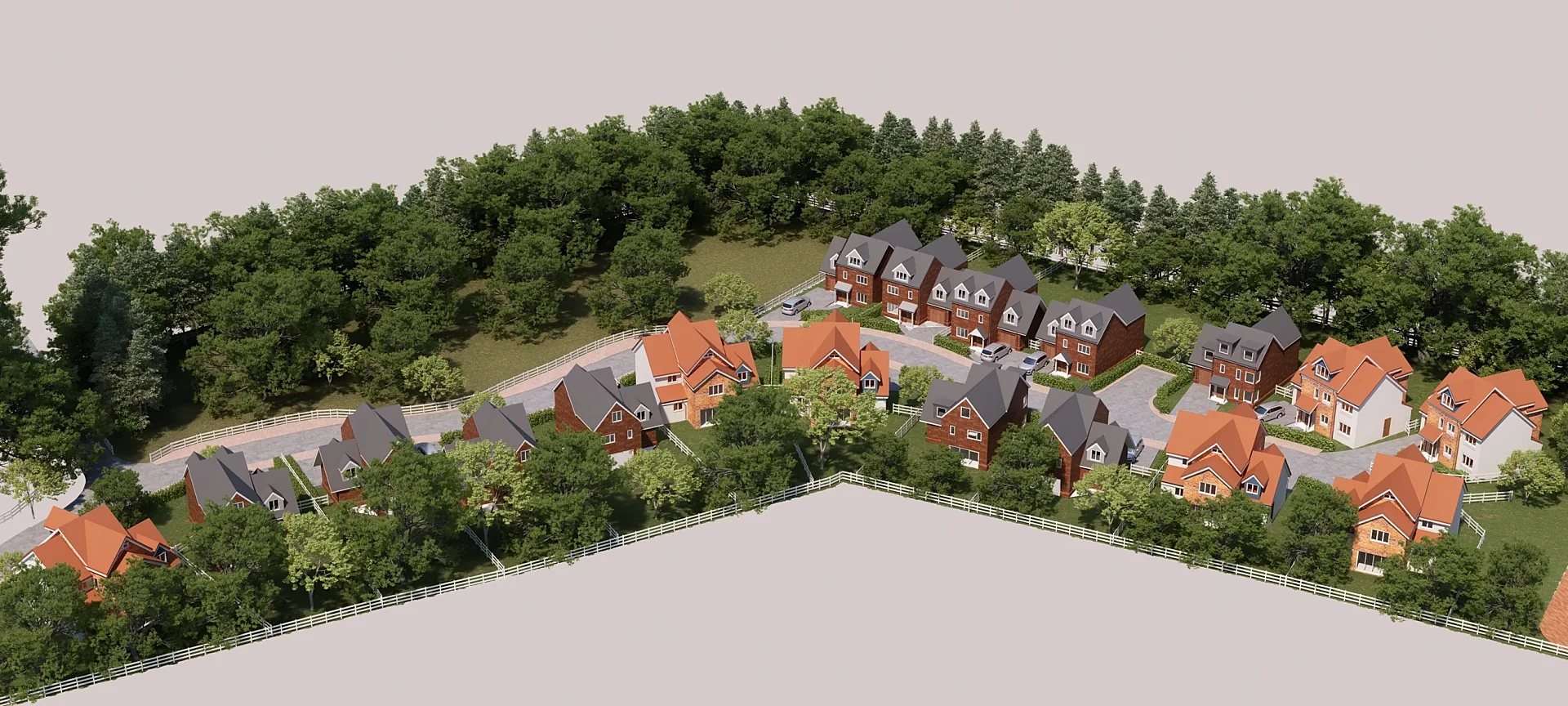
The two words are often used interchangeably, but they describe different films with different jobs. A flythrough is an exterior sequence seen from the air or from high ground: it establishes where the site is, how the buildings sit against their neighbours, and how the landscaping, parking and routes connect. It suits a whole development, a masterplan phase or a commercial campus where context is the selling point.
A walkthrough moves at eye level, usually indoors. It follows a buyer's natural route through a typical flat or show home, pausing where the space opens up, and it sells the experience of living there rather than the building as an object. Most launch films combine both: a short aerial approach, a ground-level arrival at the entrance, then a few interior moves that finish on the view from the best room.
- Aerial approach that sets the scheme in its surroundings.
- Arrival sequence at street level, from the pavement to the front door.
- Interior walkthrough of a typical home or the amenity spaces.
- Day-to-dusk transition that ends on the building lit up.
Storyboard first, then camera paths
Rendering a film is expensive in machine time, so the least costly moment to change your mind is before the frames exist. Every project therefore starts with a storyboard: a sequence of key frames, each rendered with materials and lighting close to final, annotated with the camera move, the duration and any title or caption that sits over it. You see exactly what the film will show, in order, and comment on it as you would on a draft still.
Once the storyboard is approved we set the camera paths. Walkthrough cameras move at a calm walking pace, at a believable eye height, and turn slowly enough for the viewer to read the room. Aerial cameras follow smooth, eased curves with no sudden swoops, and they keep the horizon level. A draft cut of the whole film then follows at reduced resolution, again with materials and lighting close to final, for your mark-ups before the 4K render.
Because the storyboard carries the decisions, it is worth involving everyone who will sign the film off at this stage, including the sales team and, where relevant, the architect. Changing a camera path after the draft cut is possible, but it costs schedule time that a ten-minute conversation over the storyboard would have saved.
Choosing the length of the film
Length is the single biggest driver of what a film costs, because every extra second is more frames to model, light, render and check. At £45 per second with a 30-second minimum, the shortest film we make is £1,350. That minimum suits a single flythrough or a short social teaser. Most marketing films land between 45 and 60 seconds, enough for an aerial approach, an arrival and two or three interior moments, without testing the patience of someone watching on a phone.
Longer is not automatically better. A 90-second film that lingers on a corridor loses viewers well before the payoff, while a tight 50-second edit with a clear beginning, middle and end is watched to the finish and shared. We will tell you honestly if a storyboard has more shots than its message needs, and suggest which moments could become still images instead.
Interior scenes cost more effort per second than aerial ones, because every room has to be furnished, styled and lit, so a film that is mostly walkthrough takes longer to produce than one that is mostly flythrough. The per-second rate stays the same; what changes is the time on the schedule.
Stills reused from the same model
An animation and a set of still renders are built on one shared 3D model, which is why ordering both together makes sense. The materials, the planting, the furniture and the lighting are already set up for the film, so a hero exterior or a dusk view rendered as a 4K still costs considerably less than it would as a standalone commission, and it matches the film exactly.
Single frames taken straight from the animation are useful for social posts and email headers, but they are not a substitute for a dedicated still. A film frame is composed for movement and rendered for screen; a still is composed for a brochure page or a hoarding and rendered with extra detail. We plan the camera positions so the strongest film moments double as still views where that works.
If the stills come first and the film is ordered later, we reopen the same model and the scheme looks the same in both.
Music, voiceover and titles
The edit includes an opening title, any captions agreed on the storyboard and an end card with your logo and web address. Music and voiceover are not included unless the quote states them. If you have a track licensed for your campaign, send it and we cut the film to its beat; if not, we can source a royalty-cleared track for web and social use and add it to the quote at cost.
A voiceover changes the pace of a film, because the pictures have to wait for the words. If you plan one, tell us at the storyboard stage so the shot lengths match the script. We can book a professional voice artist on request, or you can record your own and we place it in the edit. Subtitles burned into the picture are worth adding for social cut-downs, which are mostly watched with the sound off.
Sound design, such as birdsong in the garden, footsteps on a timber floor or the hum of a busy street, is a lighter alternative to music for some schemes and makes a walkthrough feel present. It is quoted the same way as music: only when you ask for it.
Delivery formats: 4K MP4 and vertical cuts
The master film is delivered as an MP4 at 4K (3840 × 2160), which plays cleanly on marketing suite screens and large monitors at launch events, with a 1080p version for websites, email and presentations. If your web team needs a short silent loop for a homepage hero, we cut one from the master.
Social platforms want a different shape. Vertical 9:16 cuts for Instagram Reels, TikTok and YouTube Shorts, and square 1:1 versions for feeds, are planned at the storyboard stage so the important part of each shot stays in frame when it is cropped. Where a shot cannot be reframed well, we render a vertical version of it. We deliver the files; you host them on YouTube, Vimeo, your own website or the property portals you list on.
Tell us early if the film will play on a particular screen, such as a portrait display in a marketing suite or an ultra-wide video wall at an exhibition stand. Odd aspect ratios are straightforward when they are planned into the camera work, and awkward when they are discovered after the 4K render.
Flythroughs at planning committee
Architects and developers increasingly take a short flythrough to planning committee. Members who do not read drawings every day can follow a film moving around a building far more easily than a set of elevations, and a well-paced sequence explains massing, routes through the site, the relationship to neighbouring homes and the landscape strategy in under a minute. Public speaking slots at committee are tightly timed, so the film has to make its point quickly.
A flythrough is illustrative material, not a verified view. If the planning case turns on exactly how a building appears from a sensitive viewpoint, that question is answered by verified views prepared to a documented method, and a flythrough sits alongside them rather than replacing them. We are clear in the brief about which is which, so nothing is presented to members as more accurate than it is.
For committee use we keep the film calm and factual: daylight rather than a dramatic dusk, realistic planting at the size it will be on completion rather than in twenty years, and people and cars at a believable density. A film that looks like an advert can undermine the case it is meant to support.
Timelines: why film takes longer than stills
We would rather be straight about this than overpromise. A typical 45–60 second film takes 2–3 weeks from approval of the storyboard, depending on its length, the number of interior scenes and how quickly comments come back. Our 5–7 business day promise covers still renders; it does not stretch to animation, and we will not pretend otherwise to win a job.
Most of that time is rendering and checking. Thousands of frames have to be produced, inspected for flicker or glitches, and assembled, and any change after the draft cut means re-rendering the affected shots. Up to 4 revision rounds are included across the storyboard and the draft cut. If the film has a fixed launch date, tell us when you enquire and we will plan the storyboard, the draft cut and the 4K export backwards from it.
Ordering stills at the same time does not slow the film down. The stills are usually finished first, inside their normal turnaround, and they give the sales team something to launch with while the animation is still rendering.
What to send for an animation brief
An animation needs everything a still render needs, plus a sense of the story you want to tell. Send what you have; a fixed quote follows within one business day and lists anything missing.
The single most useful thing you can tell us is who the film is for. A film for first-time buyers scrolling on a phone, one for investors at a launch event and one for planning committee members are three different films, even when the building is the same.
- Architectural plans, elevations and sections, or the architect's 3D model.
- Landscape plan and the external materials schedule.
- Interior finishes and FF&E schedules for any walkthrough scenes.
- Target length, where the film will be shown, and the launch date.
- Two or three reference films you like, with a note on what you like about each.
- Any script, key messages or licensed music already agreed.
Looking for prices?
Per-second rates, still render prices and package logic for a full launch set are all listed on our 3D rendering cost in the UK page. Stills of the same scheme are covered under our property CGIs and 3D exterior renders pages.
Proof
Architectural Animation projects from the portfolio
How it works
How we produce architectural animation
- 01
Send your drawings
Plans, elevations and sections in PDF, DWG, SketchUp, Revit or ArchiCAD — or a marked-up sketch. Add material schedules, finishes and any reference photos you like.
- 02
Fixed quote in one business day
You get a per-image price in pounds, the delivery date and what is included. No hourly billing and no surprises at invoice time.
- 03
Draft render for your feedback
A draft render with materials and lighting close to final, sent for your feedback before we produce the finals — so your mark-ups are about real images, not diagrams.
- 04
Revisions from your mark-ups
You mark up the draft and we work through the changes. Up to 4 revision rounds are included.
- 05
Final delivery
Finals at 4K (TIFF/JPEG/PNG) sized for print and web, typically in 5–7 business days from brief, assuming mark-ups come back within a day of each draft. Rush delivery available in 48–72 hours (rush surcharge applies).
Questions
Architectural Animation: frequently asked questions
£45 per second, with a 30-second minimum of £1,350. A typical 45–60 second marketing film therefore costs between £2,025 and £2,700. Music, voiceover and extra cut-downs are quoted separately when you want them, and a fixed quote arrives within one business day.
Typically 2–3 weeks from storyboard approval for a 45–60 second film, depending on the number of scenes and how quickly comments come back. The 5–7 business days turnaround applies to still renders, not to film. If you have a launch date, tell us when you enquire and we plan backwards from it.
Not unless the quote states it. The edit includes an opening title and a logo end card. You can supply a licensed track or a recorded voiceover, or we can source royalty-cleared music and arrange a voice artist, added to the quote so the full cost is clear before work starts.
Yes. Vertical 9:16 and square 1:1 cuts are planned at the storyboard stage, so the important part of each shot stays in frame after cropping. Where a shot does not reframe well we render a vertical version of it. Burned-in subtitles are recommended, because most social video is watched without sound.
Yes, as illustrative material that helps members and residents understand a proposal. It is not a verified view: where a decision depends on exactly how a building appears from a particular viewpoint, that is shown with verified views prepared to a documented method, and the flythrough sits alongside them.
Yes. Stills and animation are rendered from the same model with the same materials, planting and lighting, so the brochure and the film show one consistent scheme. Ordering both together is also more efficient, because the model is set up once for both.
Yes, twice. First a storyboard of key frames rendered with materials and lighting close to final, then a draft cut of the whole film at reduced resolution. You mark up both, within up to 4 revision rounds in total, before we render the final 4K version.
Where we work
Architectural Animation across the United Kingdom
The same published prices apply wherever the site is. Every project runs from your drawings by email, phone and video.
Architectural Animation is one part of our architectural visualisation work, which also covers verified views for planning applications, and we produce it for 3D rendering in London projects as readily as anywhere else in the UK.
Related services
Often ordered with this service
Property CGI
Property CGIs for UK developers and build-to-rent: exterior, interior and aerial CGIs for brochures, portals and hoardings.
from £225
3D Exterior Rendering
3D exterior rendering for UK developers and architects: street-level, aerial and masterplan CGIs from £295.
from £295
3D Interior Rendering
3D interior rendering for interior designers, developers and show homes.
from £225
Get a fixed quote within one business day
Send us your plans, elevations or even a sketch. Exterior renders from £295, interiors from £225, delivered in 5–7 business days.